The brief is the document that decides what the shoot day is worth, and it gets written the day before, in twenty minutes. Whoever skips it doesn't save twenty minutes: they lose a hundred and twenty the next day, standing in front of a dish nobody has decided how to plate.
This is the structure I use, and you can copy it even if you work with someone else.
What a photo brief actually is
It isn't a creative document. It's a sheet of decisions already made: what gets photographed, in what order, who prepares it, where the images will end up. It fits on one page.
Its job is to move the discussions off the set — where they cost everyone's time and let the dishes go cold — and onto the day before, where they cost a phone call.
The seven questions
1. Where will these images end up in the next twelve months?
This is the mother question: it decides formats, quantity, licence and budget. "Website and social" and "website, social, printed menu and a campaign" are two different jobs.
2. Which dishes, in what order?
A numbered list, with an approximate time next to each. Not "the menu": the dishes, one per line.
3. Who plates, and who has the last word?
One name for plating, one name for approval. If they are two different people, they need to agree beforehand, not in front of the camera.
4. What should they look like?
Three to five visual references, not twenty. They exist to exclude more than to include: they show what we don't want.
5. Are there any constraints in the dining room or during service?
Kitchen closing time, moments when nobody can stand at the pass, surfaces that can't be moved, staff who don't want to be photographed.
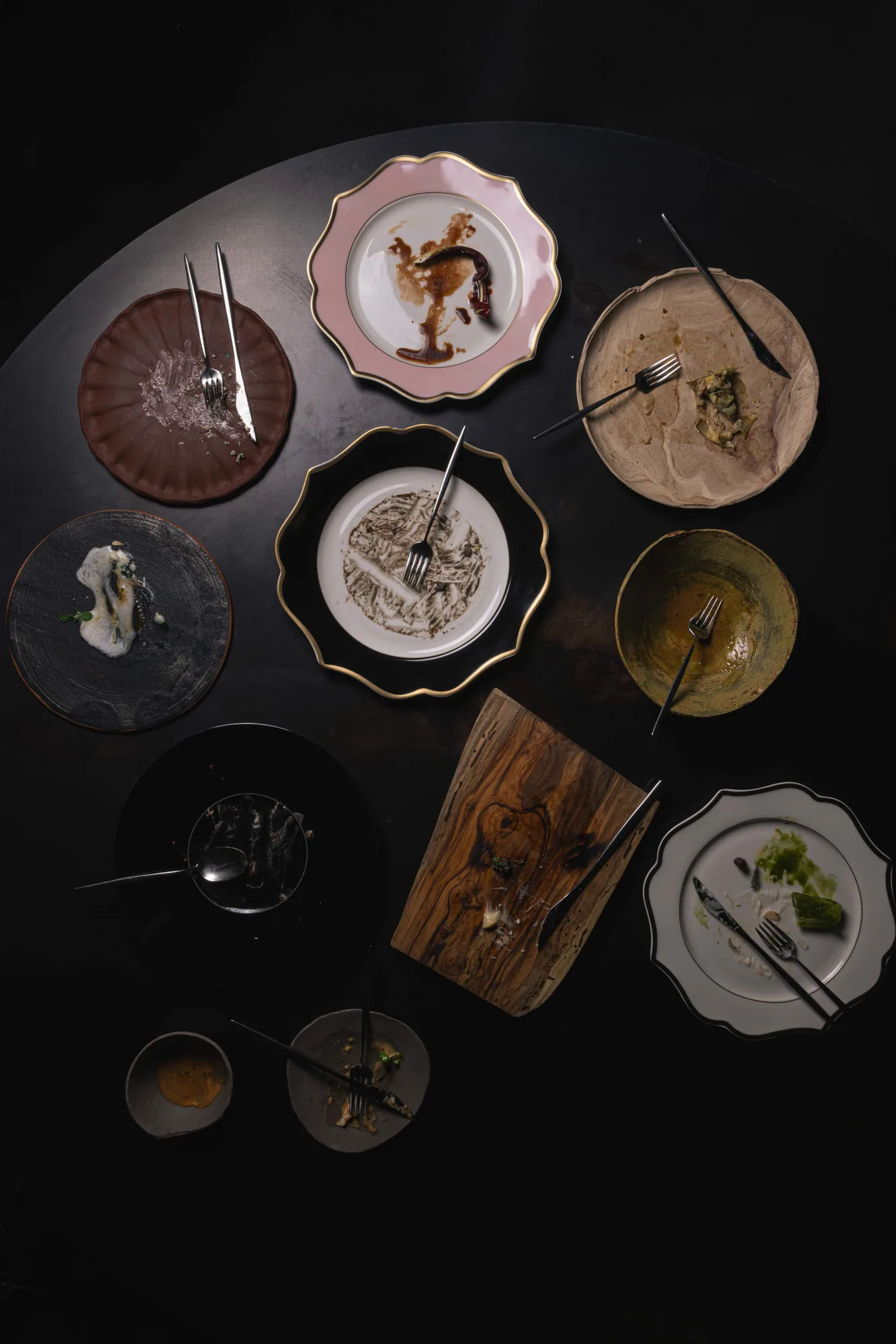
6. Which tableware is available?
With the pieces counted. The artisan's ceramic exists in three copies: if they're in the wash at 4 pm, the dish doesn't get photographed.
7. What happens if there's time left over?
A second list, in reserve. On days that run smoothly you gain two hours, and it's a shame to spend them deciding what to do.
How to build the dish list
You don't start from the menu: you start from how the images will be used.
A restaurant that posts three times a week for a year needs variety of subject, not a complete menu. So the right list mixes:
- the three or four signature dishes, the ones the restaurant is known for: they get photographed first and with the most care, because they're the ones that will travel everywhere;
- two or three seasonal dishes, which tell the story of the moment;
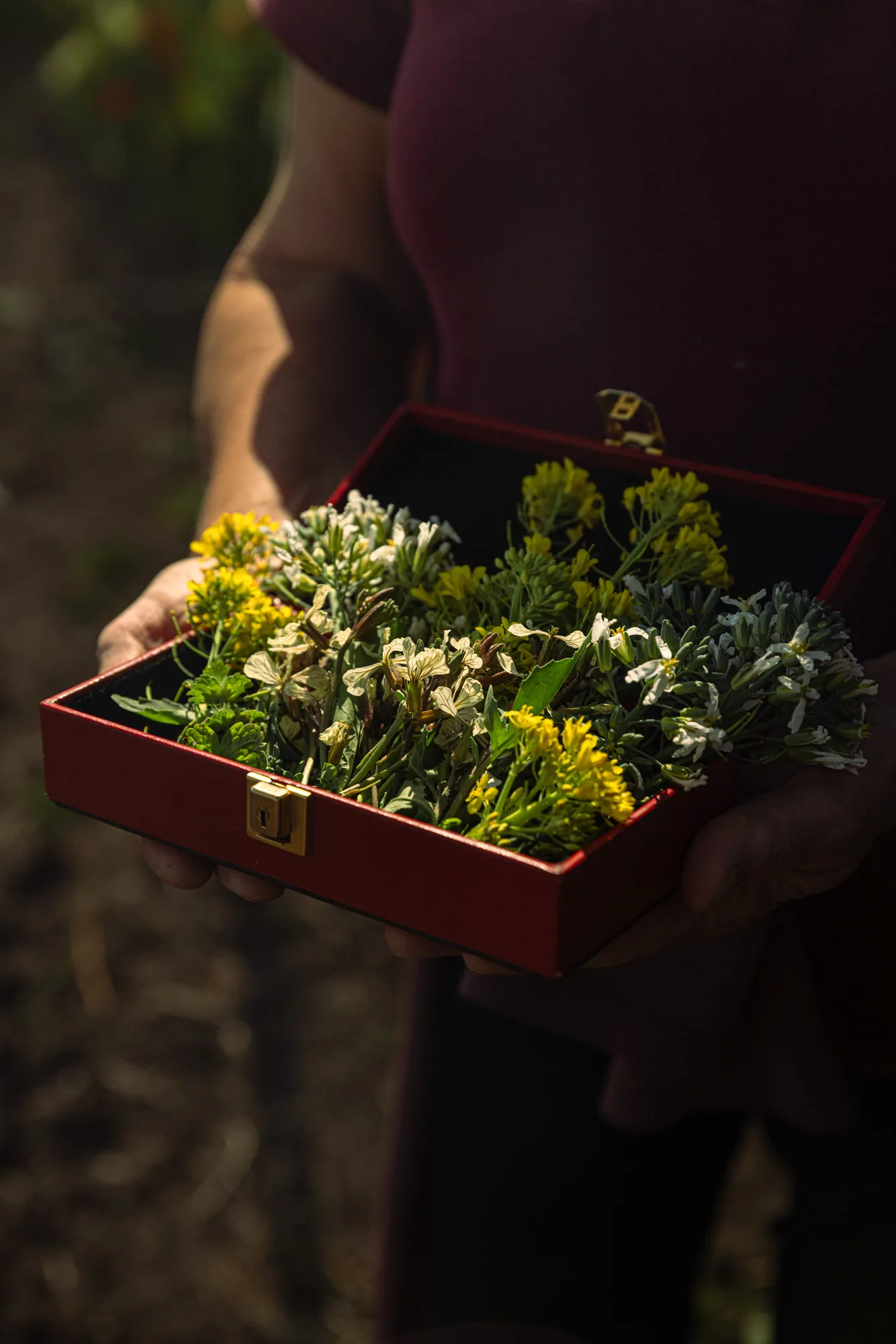
- ingredients and raw materials, which are the most versatile and longest-lasting images: they don't expire with the menu;
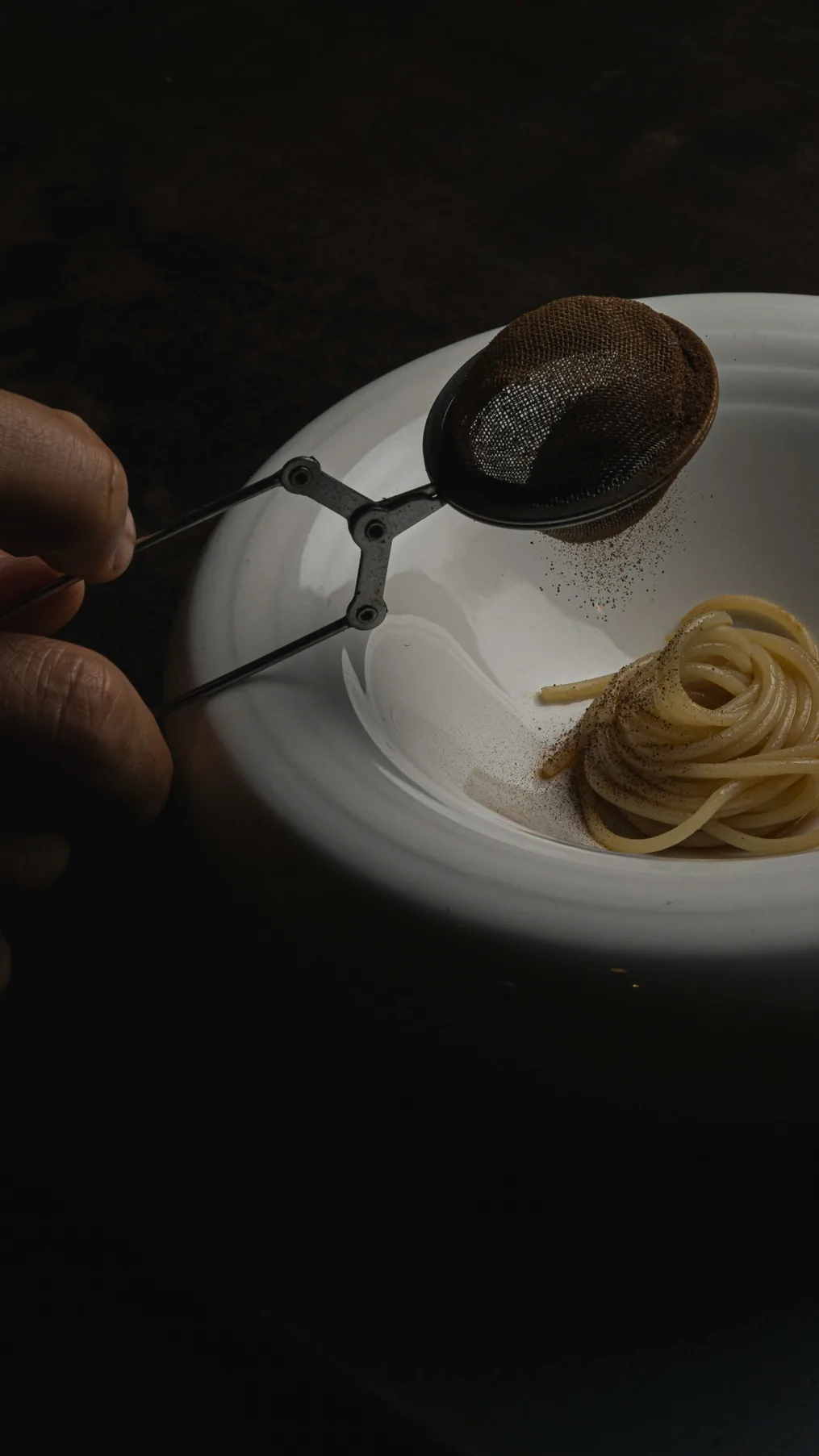
- the gesture: hands, plating, service, the pass;
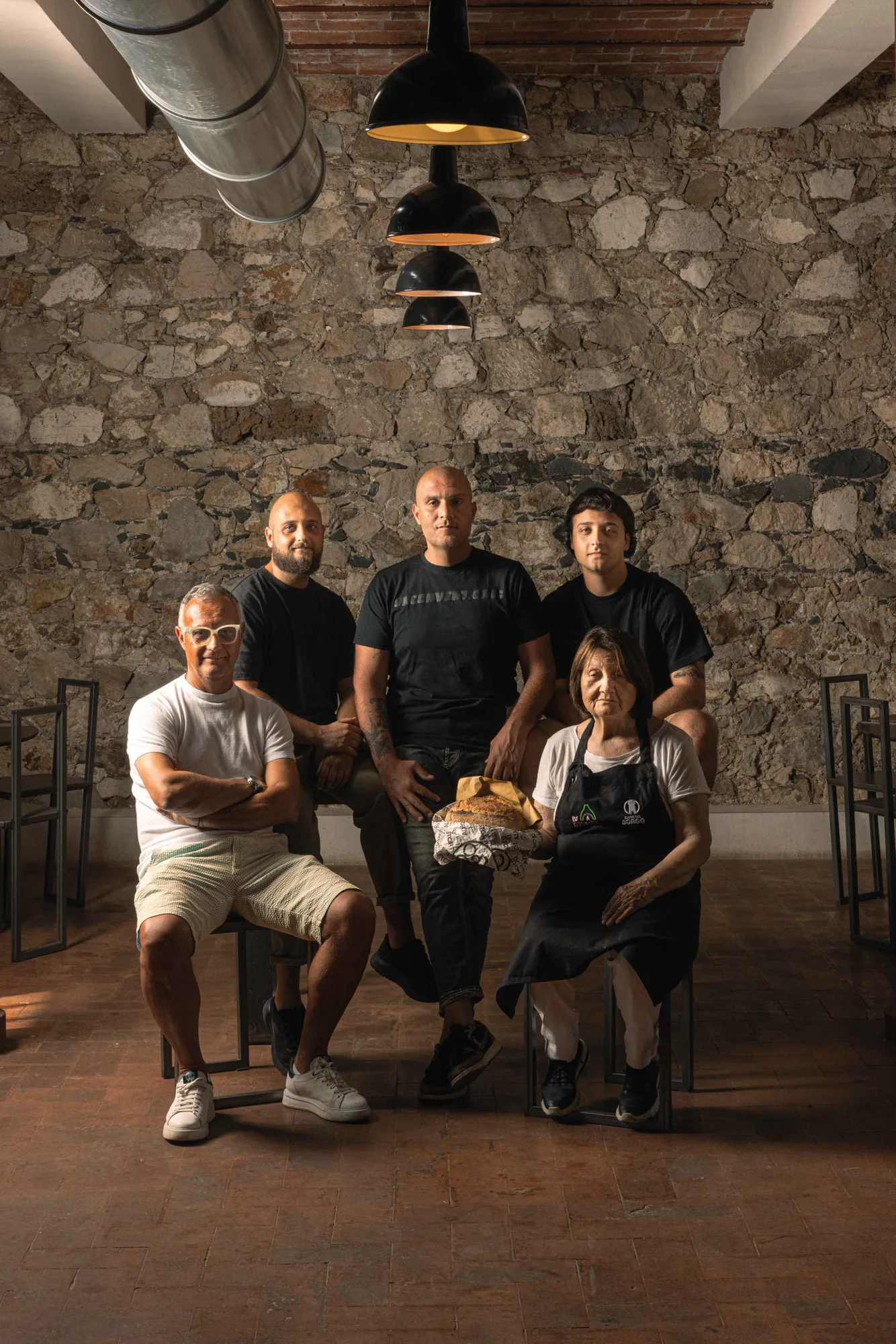
- the setting, in a separate block.
A common mistake is photographing twenty dishes and no gestures. Six months later you discover that the most-used images are precisely the ones where the dish is barely visible.
The dishes tell what you do. The hands tell how you do it. You need both, and the second lasts longer.
The moodboard: how many references you really need
Three to five images. No more.
Twenty references don't describe a direction: they describe indecision, and they produce an average result. Three well-chosen images say, in ten seconds, the level of light, the colour temperature and the distance from the subject.
Next to each one, a line on why it's there: "for the black", "for the overhead crop", "for the empty space around it". The why is worth more than the image.
As useful as the moodboard is its opposite: one or two images of what we don't want. They're the ones that prevent the most expensive misunderstanding.
Who decides what
It has to be written down, because on set there's no time to work it out.
- The chef decides whether the dish is right: plating, cooking, portion.
- The photographer decides light, crop and composition.
- The owner decides where the images end up and which ones make the final selection.
When these three roles overlap, the day slows down. When they're clear, everyone works in silence and moves fast.
The evening before: five things
- The shoot tray: tableware, cutlery and chargers set aside, and nobody touches them.
- The printed list, pinned up in the kitchen, with the times.
- The raw ingredients to photograph, held back from service.
- The surfaces — wood, stone, metal — clean and available.
- The power socket near the set identified, and free.
That's five minutes. It's the difference between starting to shoot at 3:20 pm or at 4:10 pm.
A template to copy
SHOOT — [restaurant name] — [date]
Intended use: ................. Licence length: .........
Kitchen contact: ......... Final approval: .........
Shoot ends by: .........

DISHES (in shooting order)
1. ........................  at ......
2. ........................  at ......
...

DETAILS AND RAW MATERIALS
- ........................

SETTING / PORTRAITS
- ........................

REFERENCES: 3-5 images + why
TO AVOID: 1-2 images
RESERVE LIST: ........................
If you're preparing your next shoot day and you'd like us to build the list together, write to me.
Read next: how a tasting-menu shoot is organised.