A twenty-course tasting menu can be photographed in a single day, but only if the day has been built in advance. The real work isn't pressing the button: it's deciding the order of the dishes, the light and who plates, before the first guest walks into the dining room.
This is the method I use to organise a shoot day inside a restaurant that has to keep running while we photograph.
How long a shoot day really lasts
A full day in a restaurant is eight to ten hours, of which about two are gone before the first frame. The set has to be put up, the light built, the surface chosen and tested. Whoever plans "arrive at ten and start at eleven" has already lost half a day.
The useful window is almost always the same: you go in after lunch service, around 3 pm, and work until the brigade has to prepare for dinner. In restaurants closed at lunchtime you gain the morning, and that's the best condition there is.
The honest count is this: eight to twelve dishes in a day, if they're finished, complex dishes. Twenty can only be done if some of them are simple elements, ingredients, details, raw materials.
Why you shoot in the reverse order of service
Service goes from light to heavy. The shoot does the opposite, more or less: you start with the dishes that last the least.
A crudo, a delicate vegetable, a foam, an ice cream: they have a useful life of a few minutes under the light. A braise, a filled pasta, a bread, a dry composition hold much longer and can be remade.
So the order is:
- first whatever melts, oxidises or sinks;
- then the hot dishes that have to be photographed the moment they come out;
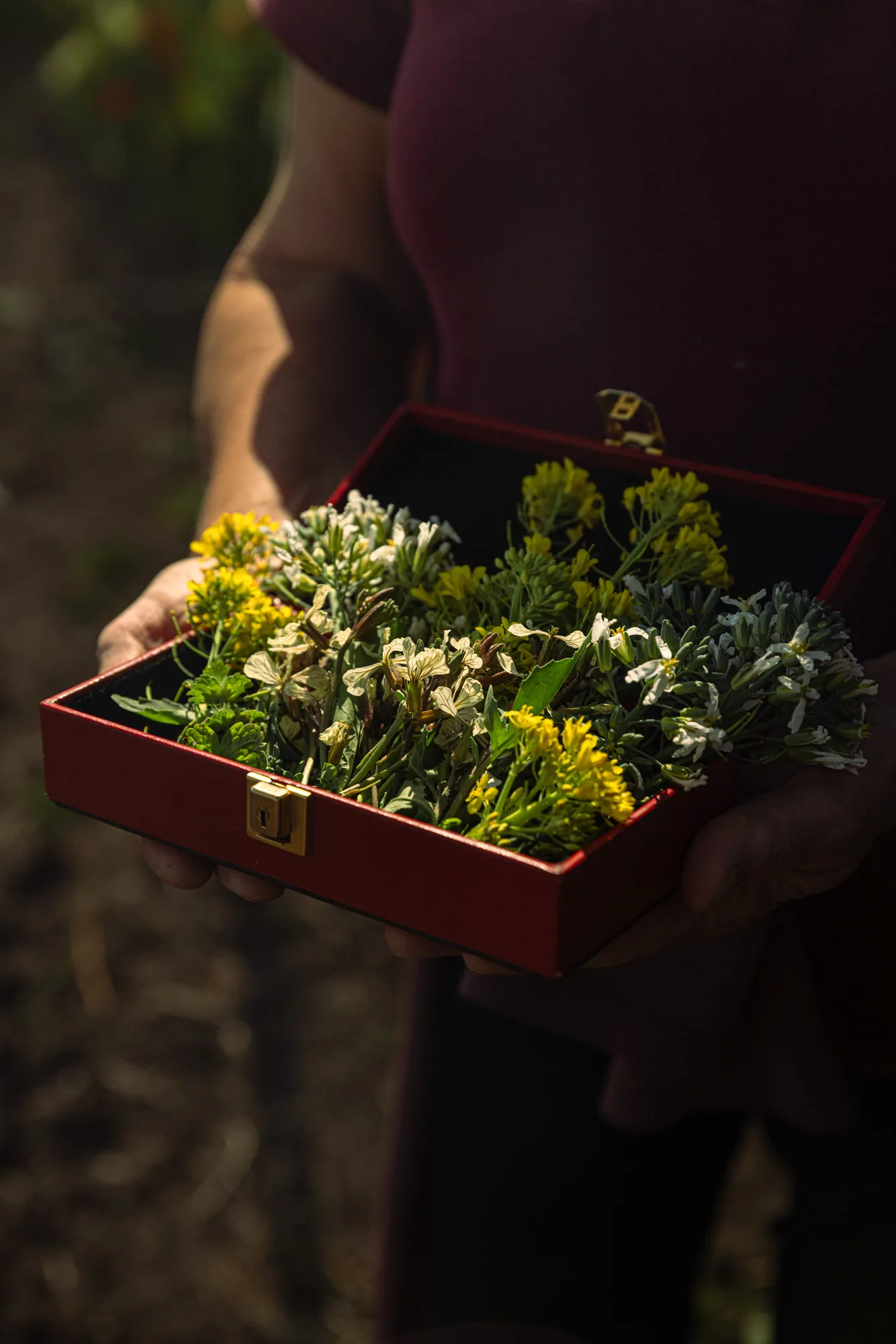
- finally everything stable: dry desserts, breads, dining-room details, ingredients.
It looks like a minor detail. It's the difference between delivering a crudo that looks alive and one that looks tired.
The set: where it goes, and why almost never in the dining room
The set goes close to the kitchen, not in the dining room. The dining room is beautiful but it's the wrong place: it's far from the pass, its light changes every twenty minutes, and it means carrying the dish around in the very seconds when it's at its best.
The practical rule: the dish should travel fewer than ten steps from the pass to the set. Every extra metre is lost temperature, condensation, sauce on the move.
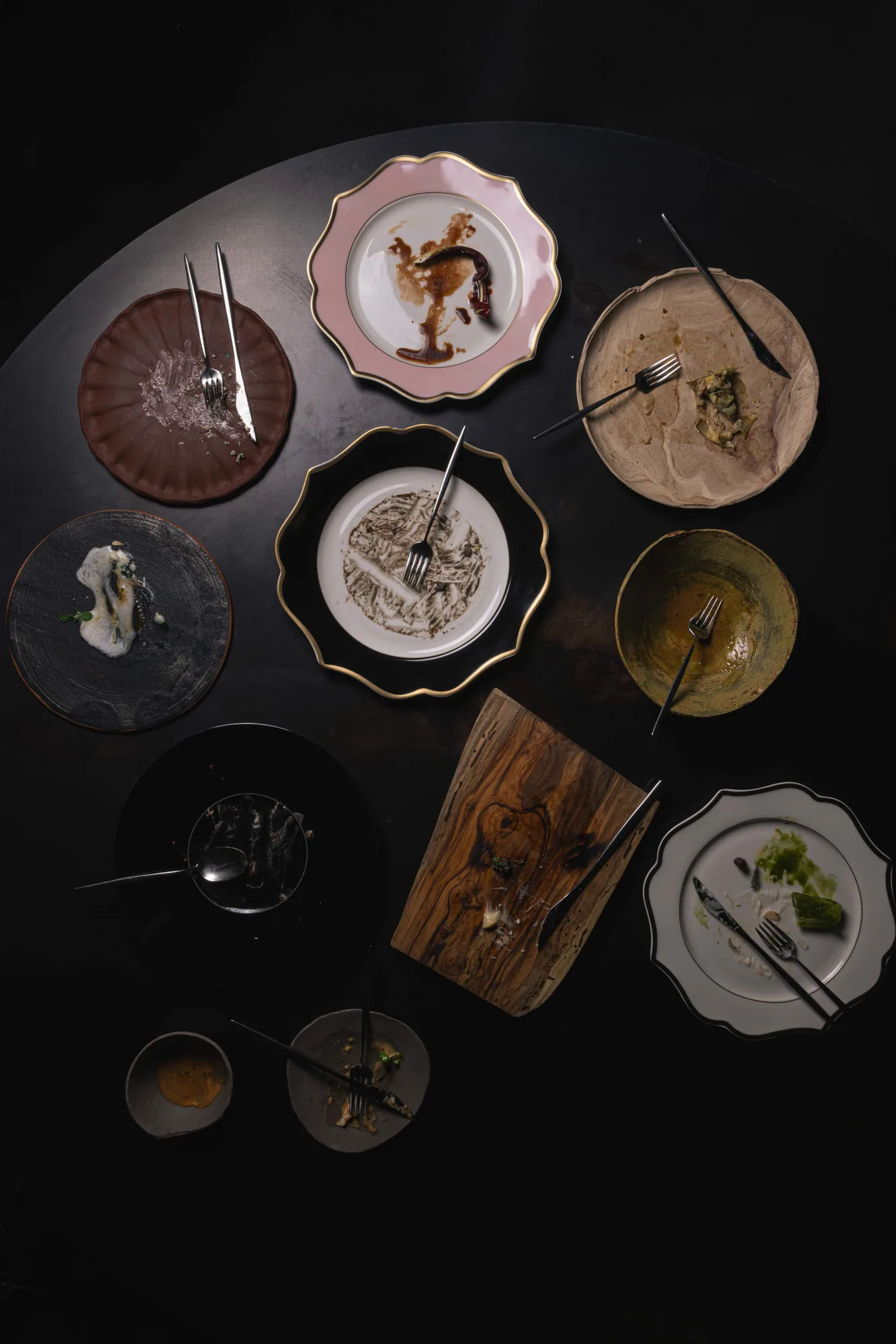
The dining room gets photographed separately, in a dedicated block, when needed: interiors, table settings, details, portraits. They're two different jobs, with two different lights, and mixing them wastes everyone's time.
You don't chase the light: you build it once and defend it for the whole day.
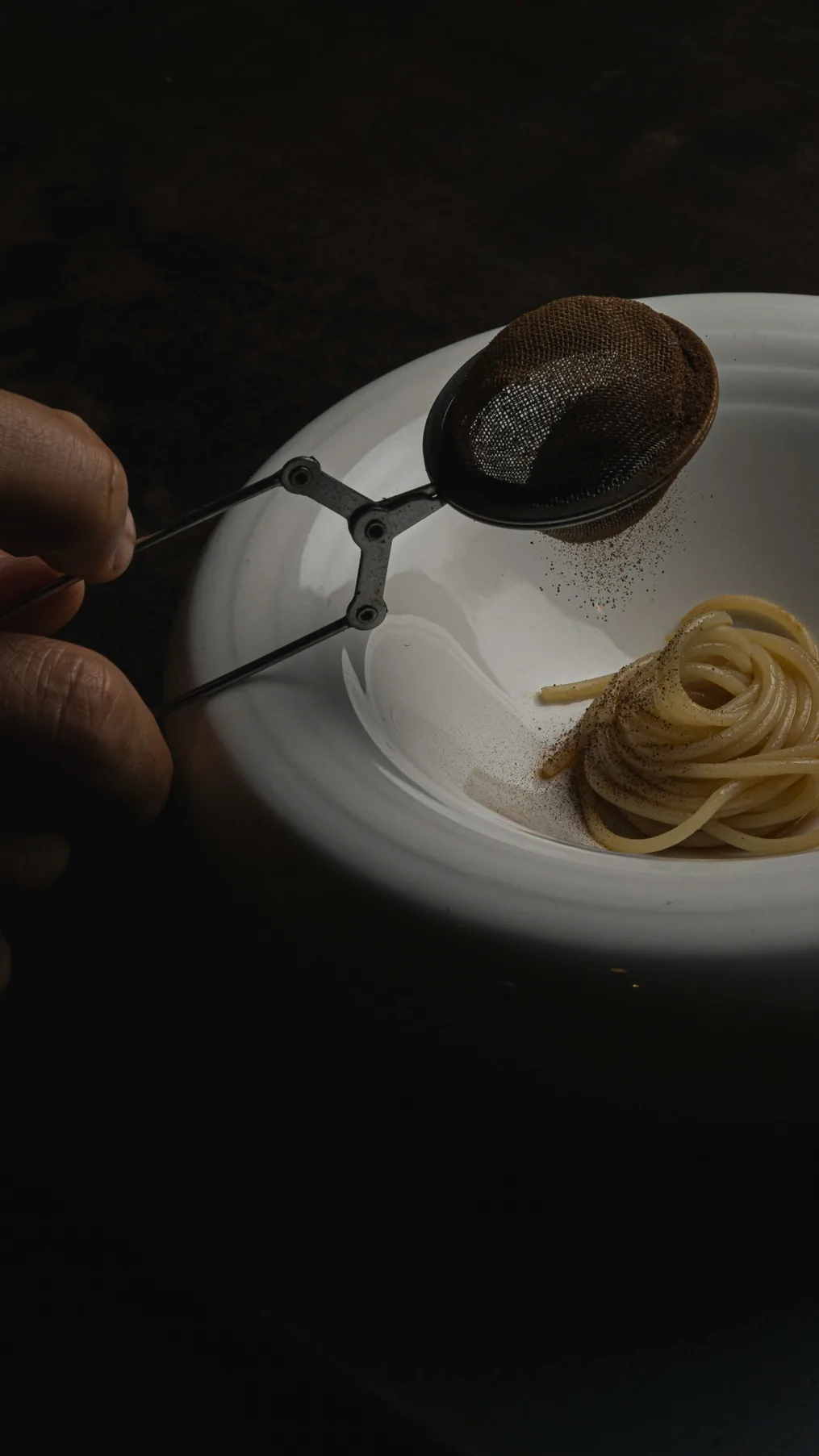
In fine dining I almost always work with one single light, directional and soft, and with black flags that remove light instead of adding it. Chiaroscuro is what gives the dish its texture: the risk is never darkness, it's flatness.
Who is needed in the kitchen during the shoot
Two people, no more and no fewer.
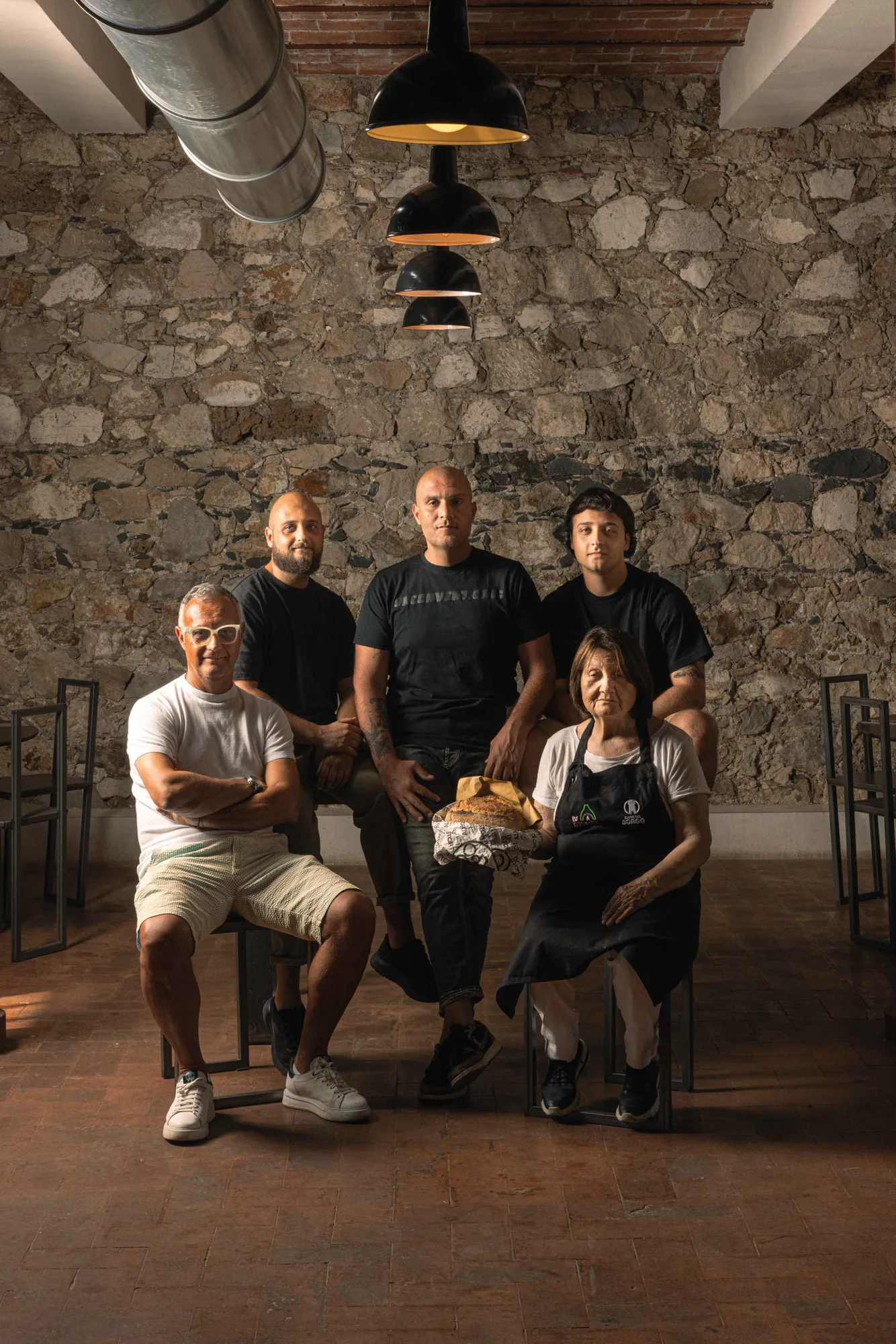
A member of the brigade who plates. It has to be someone who knows the dish by heart and has the authority to redo it if it isn't working. If a commis in their first week plates it, you photograph a version the restaurant doesn't serve.
A person who carries back and forth. It seems unnecessary. It isn't: whoever plates has to stay in the kitchen preparing the next dish while the previous one is on set. This relay gains two or three dishes a day.
The chef, ideally, comes by to approve every two or three dishes. They don't need to stand beside the set: they need to see the result while it can still be changed.
What derails the schedule
In the order it really happens:
- The dish isn't ready when it's needed. Solved with a list agreed the day before, with times next to each course.
- Nobody has decided which version of the dish gets photographed. Many dishes have two platings: the service one and the "beautiful" one. That has to be decided beforehand, not in front of the camera.
- The tableware isn't there. The right plate is in the wash, the charger has run out, the cutlery for the set is already in the dining room. Prepare a tray dedicated to the shoot, and nobody touches it.
- Dishes get added on the fly. It's the most natural thing in the world and the most expensive: every unplanned dish takes another one off the list.
- Service starts earlier than planned. Agree on a time the shoot ends, and both sides stick to it.
Almost all of this is avoided with a brief written the day before.
What gets delivered, and how quickly
A day generally yields between fifteen and twenty-five finished frames, not one per dish: some dishes deserve two crops, others only one.
The delivery that makes sense for a restaurant comes in three formats:
- vertical 4:5 for Instagram and the feed;
- horizontal 3:2 for the website, booking portals and print;
- square or close-up detail for stories and for uses where the dish has to be read in half a second.
A reasonable turnaround is ten to fifteen working days for selection and post-production. Whoever promises delivery the next day either doesn't do post-production or has done it automatically, and it shows.
The question that matters most
Before setting the date, the right question isn't "how many dishes can we get through". It's: where will these images end up in the next twelve months?
A menu that changes every season isn't photographed like a menu that stays. A restaurant opening in two months needs different images from one that has to fill Tuesday nights. The answer to that question decides the dish list, the formats and — in the end — the quote as well.
If you're planning your next season, write to me: the first thing we do together is the list, not the date.